


'%3e%3cpath%20d='M24.5464%2012.669C24.5464%206.00112%2019.1739%200.595703%2012.5464%200.595703C5.91897%200.595703%200.546387%206.00112%200.546387%2012.669C0.546387%2018.6951%204.93459%2023.6899%2010.6714%2024.5957V16.159H7.62452V12.669H10.6714V10.0091C10.6714%206.98325%2012.463%205.31185%2015.2039%205.31185C16.5169%205.31185%2017.8901%205.54766%2017.8901%205.54766V8.51884H16.377C14.8864%208.51884%2014.4214%209.44957%2014.4214%2010.4044V12.669H17.7495L17.2175%2016.159H14.4214V24.5957C20.1582%2023.6899%2024.5464%2018.6953%2024.5464%2012.669Z'%20fill='%23FBFBFB'/%3e%3c/g%3e%3cdefs%3e%3cclipPath%20id='clip0_2425_6619'%3e%3crect%20width='24'%20height='24'%20fill='white'%20transform='translate(0.546387%200.595703)'/%3e%3c/clipPath%3e%3c/defs%3e%3c/svg%3e)


Eating Together at Home: Building Stronger Families Through Shared Meals
May 13, 2026
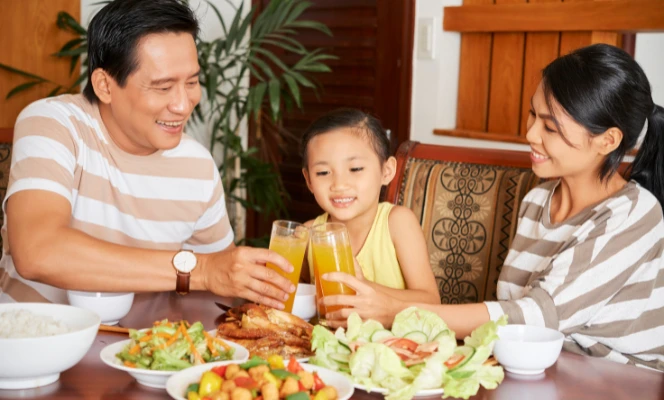
In today’s fast-paced world, family members often find themselves moving in different directions like work, school, and personal commitments. As schedules fill up, finding the time for shared meals can become a challenge. More often than not, many families find themselves eating on the go or opting for quick takeouts for sustenance. While this may seem normal for modern living, it also means missing out on one of the simplest ways to stay connected as a family.
The dining table goes beyond being a furniture for taking meals—it is also a primary setting for everyone to slow down and reconnect.
Healthier Meals for your Loved Ones
One of the immediate benefits of eating home cooked meals is that you are able to control what you eat. When you prepare meals, you are able to ensure that your loved ones are eating healthily. Not only that, you can tailor your everyday meals based on your family’s preferences. As you encourage family members in meal planning can also inspire them to practice better eating habits—fostering a thoughtful and meaningful activity for your loved ones.
Eating together doesn’t need to have elaborate or grand meals, most of the time it’s the simple and intentional meals that make all the difference.

Improve Moods and Mental Health
Sharing meals is also a great avenue for communication. Sitting down together will create a better environment for talking about each family member’s experiences and feelings in a relaxed setting. Regular interactions with your loved ones can significantly reduce stress and anxiety while strengthening emotional connections with each other.
This practice is especially beneficial for children for their growth, as these moments reassure them that no matter how busy life gets, there will always be time reserved for family.
Model Healthy Life Habits
Children learn a great deal by observing the adults around them. When they see parents preparing meals, choosing nutritious foods, and prioritizing family time, they are more likely to adopt these habits themselves.
Cooking together is also an opportunity to teach valuable life skills in a practical and enjoyable way. Children can learn how to prepare simple meals, follow instructions, manage time, and work as part of a team. With these skills, they instill a sense of responsibility and independence as they grow older.

Preserving Traditions and Creating New Ones
Food is deeply connected to culture, tradition, and personal identity. Cooking traditional dishes at home allows families to pass down recipes and stories from one generation to the next. At the same time, trying new recipes together can expand their worldview and introduce new traditions into the household.
Through this, mealtimes can become experiences that your family members will cherish and look forward to everyday.
Creating Moments That Matter
Ultimately, shared meals are one of the best ways to create lasting moments with those who matter most. Some of the most meaningful family memories are formed during simple, everyday moments. A shared laugh over dinner, a story told while cooking, or a quiet conversation after a long day can be moments you’ll treasure for a lifetime.

In the end, the spaces within your home play a vital role in nurturing these connections and strengthening relationships. That’s why it’s important to have a home that supports your need for togetherness. Suntrust-developed communities, like Suntrust Sentosa in Calamba, Laguna, are designed to provide both comfort and a sense of belonging. With its green open spaces, community amenities, and expansive homes, families can easily gather, unwind, and connect with one another after a long day.
These moments don’t need to be planned or perfect. What matters is the consistency of being together and the willingness to make time for one another—creating a stronger family, both in wellness and connection.
Share this article